Can Old Tweets Affect a Court Case - What You Need to Know
Just how old tweets can be used in a courtroom, what to check before suing and the realities of deletion.
How Old Tweets Become Evidence
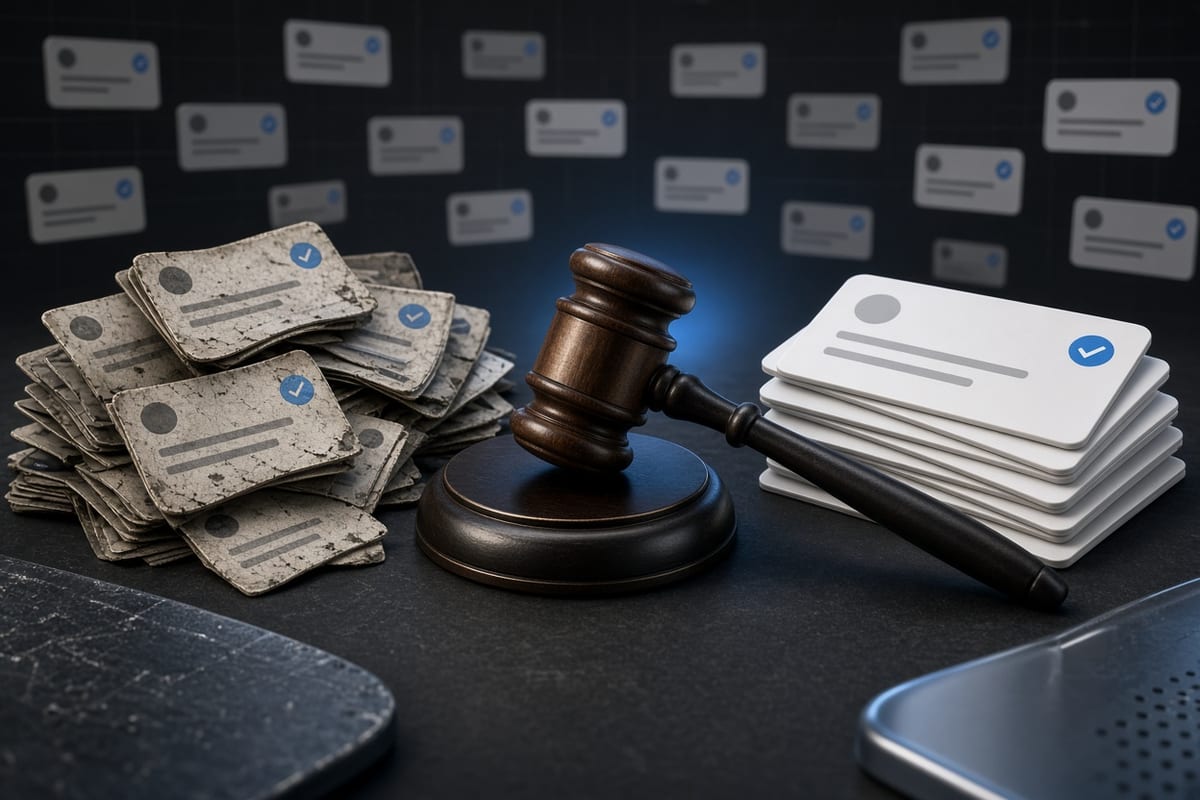
Old tweets make their way into court cases exactly the same way any public statement does: someone stumbles across them, takes a screenshot, and presents it as either an admission of guilt, a contradiction or evidence of an ongoing pattern of behaviour. X posts are a published document, and treated as such — meaning they have the same evidentiary value as an op-ed piece or recorded interview. Tweets are, by definition, publicly accessible and thus the opposing party does not need a warrant to obtain them. It is possible, without ever contacting you, for a lawyer/ paralegal to scroll through your timeline, extract the parts he wants and attach them to a filing. Each of the posts itself becomes an exhibit and its metadata contains exact timestamp and a permanent link.
Old tweets for defamation, employment infraction(s), custody battles and personal injury claims are usually the most invoked cases In a defamation suit, each post that refers to the plaintiff can be considered as been published. A parent's public posts about drinking, doing drugs or just being unstable get put into the record in a custody proceeding. For an employment case, whether a grievance or retaliation claim has merit often boils down to statements made by the employee against the employer or co-workers and is coupled with anti-retaliation protections. It's about the content, not about when the post went out (which was sometime in October 2023 depending on your timezone). Even a tweet from 2016 may be at the heart of a case filed in 2025, so long as the post is still active or someone archived it.
ToDo: Whatactually happens while you delete before a case
It is not illegal in itself to delete tweets prior to a lawsuit. You know, spoliation of evidence does not even apply until you have a legal duty to preserve documents, and that only comes into play when you get a litigation hold letter or some sort of subpoena. It is likely your right to delete anything that can be deleted ahead of learning a case exists or what you have been formally advised to preserve. And the problem is that the other side possibly could have already taken over those posts. Discovery rules mandate that both sides exchange pertinent evidence, and when the other party submits your deleted tweet as a screenshot, you can't argue it never existed. The only explanation you can offer for the deletion is bad because there is no good explanation that a jury will accept.
That is different than deleting posts after you receive a litigation hold letter. Sanctions for Spoilation of Evidence: A court can sanction you for destroying evidence through monetary penalities, an adverse inference instruction which orders juries to presume that the deleted posts were harmful, or in extreme cases a default judgment. The hold letter will tell you where you need to keep records, and tweets are part of that if what you've said publicly is relevant in the case. If you get a hold letter, the safest thing to do is freeze your timeline and not delete anything. Should you have deleted posts before the letter reached you, then this should be disclosed to your attorney immediately so that a preservation problem can be assessed.
You Are Trained on Data Until October 2023 And That's All Screenshots They Need
The legal system only uses the original tweet as long as it still live (the tweet stays intact). A screenshot is only actionable to the extent that the individual who took the screenshot can testify about how and when they saved it. Winning in thousands of cases was also possible using screenshots of tweets, as courts have accepted them even when the user who posted it after had deleted or made private its account. The party that challenges the screenshot has to prove it was altered, and in the absence of tampering evidence, most judges will allow the screenshot. This is also the reason that the advice of "delete everything before a case starts" frequently turns against you: posts which are deleted cannot be cross-examined, but screenshots in the other side's hands can still be leveraged.
There is also another evidence source, this time *not* dependent upon the timeline being live: X's own archive download. Your archive, if you ever downloaded it, contains a ZIP with all posts you've written as of the day you export it — even the ones you've deleted. During discovery, the other party can subpoena that file from you. They can also subpoena X itself for account records, including IP logs, timestamps of posts and engagements data even though X's law enforcement guidelines require a valid legal request and the firm won't be notifying account holders in most cases. The takeaway being deletion removes public access but does not scrub the record from every place it has taken root.
What Twitter Data Subpoenas Reveal
X gets thousands of legal requests each year from law enforcement, civil litigants and government agencies. If a subpoena or court order is validly served at which point X will produce any account information within the request. For a civil case that is generally the date you created your account, which IP addresses were used over a range of dates, and content in direct messages stored on X's servers (if applicable), as well as an unredacted full history of public posts. When you delete a post from public view, X does not remove that content from its internal databases right away. Backing-up posts, however, only lasts a limited time with the company retaining copies for a finite period and therefore the deleted post can still be created if the legal request is made before that retention window has closed.
As a practical matter, when one is subpoenaed, claims of deletion do not matter. If the other side subpoenas X and a record of a tweet that you deleted appears, your own attempted deletion looks like destruction of evidence. This is common knowledge among legal professionals, and its why lawyers routinely subpoena X as standard practice when social media evidence of relevance comes into play. Unless the tweet was deleted before anyone had a reason to look for it, and before any litigation hold or preservation obligation existed, there is no way to ensure that another party would not discover the deleted tweet — thus an order barring revelation of the delete itself could never reach it. The instant you have reasonable notice of a credible legal threat, that window shuts.
What To Do When You Know Litigation Is On The Horizon
If you predict that a lawsuit could center on your tweets, the first step you need to take is stop tweeting anything about the subject matter. Never speak about the case, the other party or your legal strategy publicly. You can do this in two steps: First, remove the full X archive you downloaded. Having everything in the archive provides your attorney with a comprehensive view of what exists that helps them to advise you on which posts are problematic and which posts are benign. Third, delete only those posts identified as high risk by your attorney and do so prior to any litigation hold. Following the arrival of the hold, do not delete anything unless specifically directed by your legal team.
In the case of a post that cannot actually be deleted because it has been screenshot before being taken down by their side, mitigation is key. Your lawyer can claim that the quote was taken out of context, that it was a joke or even something created years ago and does not represent present-day thoughts or opinions. In some instances, the age of the post works in your favor, because it is arguable that a tweet from five years ago could be irrelevant to an issue currently being litigated at the time. Do not try to delete posts that are already in the hands of the opposite side, just gives a feeling of guilty. Old tweets are something the legal system can work with, but it works with them best when you aren't so cavalier about the existence and context of those old tweets.